Why Your Resume Is Not Getting Shortlisted, and How to Fix It
Resume not getting shortlisted? How screening really works in 2026, what applicant tracking systems do and do not do, how to rewrite bullets around evidence, and a four week fix plan with referral templates and a checklist.

Sep 15, 202614 min read
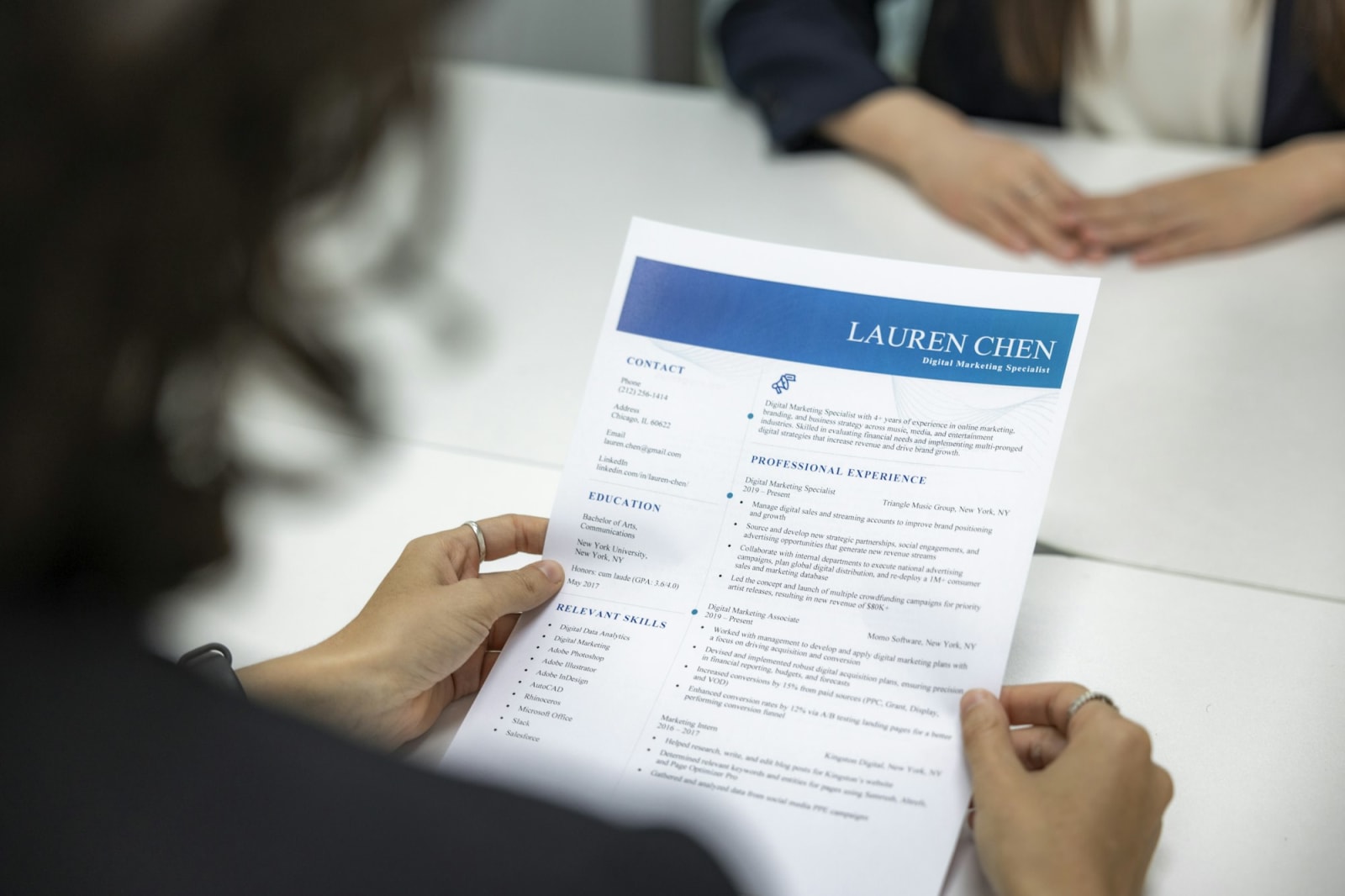
Resume not getting shortlisted? The short answer
If your resume is not getting shortlisted, you are not alone, and it rarely means what you fear. A resume not getting shortlisted is almost never about your ability, and almost never a robot. In my experience it is one of three things: the resume does not show evidence that you can do the job, it does not match the specific role you applied for, or it only ever travels through the most crowded channel there is, the "Apply" button on a popular job post.
A student in the final year of a master's in computing wrote to me recently. Excellent grades, top of the classification scale, a clear goal of working at a large tech company, and one line describing the problem: "Can't get resume shortlisted." I hear a version of this every week, from fresh graduates in Lahore and Karachi, from developers with two or three years of experience, and from people who have just moved to a new country and suddenly hear nothing back.
This post explains how resume screening actually works in 2026, why capable people get filtered out, and exactly what to change. It ends with a four week plan and a checklist you can run before you send your next application.
How software engineer resume screening actually works
Before fixing anything, it helps to know who (or what) is reading your resume and for how long.
A human skims, and fast
In its 2018 eye tracking study, the job site Ladders fitted 30 professional recruiters with eye tracking and found the average initial screen of a resume lasted about 7.4 seconds. In that skim their eyes went to current and previous titles, company names, dates and education. Resumes with simple layouts, clear sections and headings held attention. Cluttered layouts, multiple columns and long sentences did badly.
Seven seconds is not a verdict on your worth. It is the time it takes someone to decide "read properly later" or "next". Your job is to make the first answer easy.
ATS resume myths versus reality
You have probably seen the claim that "75% of resumes are rejected by an ATS before a human sees them". It is repeated everywhere and I have never seen a credible study behind it. In late 2025 the resume company Enhancv interviewed 25 US recruiters who use systems like Workday, Greenhouse, Lever and LinkedIn Recruiter. Twenty three of the 25 said their applicant tracking system does not automatically reject resumes for formatting, design or content. What every one of them did use was knockout questions: work authorisation, location, required certifications.
| Myth | What is closer to the truth |
|---|---|
| A robot rejects most resumes automatically | Most systems store, search and rank applications; people decide |
| You must stuff keywords to pass | Recruiters search by skills and titles, so honest keywords help you appear, but stuffing reads badly to the human who opens it |
| Fancy formatting gets you auto rejected | Complex layouts can parse poorly, which makes you harder to find and read. Simple is safer |
| Nothing is filtered automatically | Knockout questions often are: location, work authorisation, a required degree |
The same recruiters described the real enemy: volume. One of them said some software engineering roles attract around 2,000 applicants. A recruiter searches, reads the strongest matches, builds a shortlist and stops. You need to be in that first cluster and obviously relevant within seconds.
Why your resume is not getting shortlisted when you are clearly capable
Here are the patterns I see most often when strong students and engineers send me their resumes.
- Generic bullets. "Worked on a web application using React and Node.js." This describes a technology, not a contribution. Every applicant in the pile has that line.
- No outcome. Nothing tells the reader what changed because of you: faster pages, fewer errors, more users, less manual work, a grade, a competition result.
- Projects that look like tutorials. A weather app, a to do list, a clone from a popular video. Fine for learning, but they signal "beginner" to a product company. Worse, when I click through, the live demo is often broken, the repository has
node_modulescommitted, or features listed on the resume do not exist. That mismatch costs more credibility than having fewer projects. - Poor structure. Skills buried at the bottom, inconsistent dates, two dense pages for a fresh graduate.
- Unclear location or work authorisation. If you have recently moved, or you are applying across borders, recruiters may not know whether you can legally work there. If you can, say so plainly.
- Only applying cold. Sending the same file through the careers page of the most famous companies in the world is the most crowded channel there is.
If you are a fresh graduate applying everywhere and hearing nothing, I wrote a longer answer to exactly that in applying to jobs as a fresh graduate and hearing nothing back, and the short version of this post lives in the question why is my resume not getting shortlisted.
Rewrite your resume bullet points around evidence
The most useful single change is rewriting every bullet so it shows a result. Laszlo Bock, who ran people operations at Google, described the formula in 2014: "Accomplished [X] as measured by [Y] by doing [Z]." You will not always have a number, but you can nearly always describe scope, scale or outcome.
Here is what that looks like in practice. The "after" column is illustrative; use your own real numbers.
| Before | After |
|---|---|
| Worked on a web app using React and Node.js | Built a course booking platform in React and Node.js used by a class of students during a pilot, replacing a manual email sign up |
| Responsible for backend APIs | Designed the REST endpoints for orders with validation and pagination; cut average response time by adding the right database indexes |
| Did machine learning project on images | Trained an image classifier on a public dataset, compared three architectures and documented why the smallest one won |
| Helped the team with testing | Wrote integration tests for the payment flow that caught two bugs before release |
| Participated in hackathon | Led a team of four to a working prototype in 36 hours; placed in the top three |
Only use numbers you can defend in an interview. If you do not have a real metric, describe scope honestly rather than inventing one. Interviewers will ask, and a made up figure unravels fast.
Make your projects prove depth
For product companies and large tech firms, one or two deep projects beat six shallow ones. A project that proves depth has:
- A real problem, ideally one you or someone you know actually had.
- Non trivial engineering: authentication, data modelling, background jobs, caching, tests, deployment, handling failure.
- A live demo that works and a clean repository with a README that explains what it does, how to run it and the decisions you made.
- Consistency: every feature on the resume exists in the project.
On the resume, give each project one line on what it is, two or three bullets on what you built and why it was hard, and links to the code and the live version. If you are still choosing a final year project, pick one that doubles as your strongest resume entry; the FYP ideas library has briefs scoped around real deliverables and I explain the trade offs in which final year project helps you get a job. If you feel you have almost nothing to show, start with everyone has internships and projects and I have almost nothing and how to build a developer portfolio as a beginner.
Your GitHub is part of the evidence. A tidy profile README and sensible commit history help, and if Git still feels shaky, read how to learn Git and GitHub properly.
Software engineer resume format: one page, in the right order
For a fresh graduate or early career engineer, keep it to one page. This order works:
- Header: name, email, phone, city, LinkedIn, GitHub, portfolio. Use readable URLs or clear usernames, not hidden hyperlinks.
- Education: near the top while you are a recent graduate. Degree, institution, dates, and grades if they are strong.
- Technical skills: grouped as Languages, Frameworks, Databases, Tools and Cloud. Honest and relevant.
- Experience: internships, part time roles, research, teaching assistant work.
- Projects: your strongest two or three.
- Achievements: competitions, scholarships, publications, open source contributions.
Small details that matter more than they should:
- One naming convention. React or React.js, not both.
- Consistent dates and headings throughout.
- A single column, standard fonts, enough white space. Remember the eye tracking result.
- Export to PDF and check you can select and copy the text. It is a quick sign it will parse cleanly.
If you want a clean starting point, Jake's Resume Template is a popular single column LaTeX template, and the Tech Interview Handbook resume guide is a thorough free walkthrough.
Tailor your resume to the job description
You do not need a new resume for every application, but you do need a version per role type: backend, frontend, full stack, mobile, data. Huntr's Q1 2026 job search report found that tailored resumes reached an interview at roughly twice the rate of untailored ones (4.23% against 2.07% across the applications it tracked). That is one dataset from one tool, but it matches what I see.
For each application that matters:
- Highlight the repeated words in the job description: skills, tools, responsibilities.
- Mirror them where they are genuinely true, in your skills section and in bullets.
- Reorder projects so the most relevant one is first.
- Adjust the summary line, if you use one, so it names the role.
AI tools can speed up this matching if you use them carefully and check every word. Grokking Prompt Engineering for Professional Portfolio and Job Search is a practical course on doing that without ending up with a resume that sounds like everyone else's.
Align LinkedIn with your resume
Recruiters often check LinkedIn after reading the resume, and sometimes find you there first. Mismatches raise doubts: an internship on one and "full time" on the other, different dates, a company with no presence anywhere. Make them agree.
Then make LinkedIn work for you: a headline that names your target role and main skills, a short About section, projects with links, and a clear photo. I cover what actually helps, and which popular tips are folklore, in LinkedIn for engineers: what actually works.
Referrals and warm outreach
A referral does not guarantee an interview, but it usually gets your resume read by a person with more attention. In the same Huntr survey, 38% of respondents who landed interviews got them through referrals, recruiter outreach or networking rather than online applications.
Where to find people: alumni from your university at the company, seniors from your programme, speakers at local meetups, engineers who write about their work.
A first message that works:
Hi [name], I am a final year computing student focused on backend systems. I saw you work on [team or product] at [company] and read your post about [topic]. I am applying for the graduate software engineer role and would value ten minutes of your view on what the team looks for. Completely understand if you are busy.
After a conversation, or if they offer:
Thank you again for your time. If you are comfortable referring me for [role, job ID], here is my resume and a two line summary: [summary]. No pressure at all if not.
Keep it short, specific and respectful. Five to ten thoughtful messages a week beat fifty identical ones. For more templates, read how to cold message recruiters and ask for referrals on LinkedIn.
Graduate programmes, trainee roles and timing
Large tech companies usually run structured early career hiring: internships, new graduate roles, sometimes apprenticeships. In Pakistan, many software houses run trainee and associate programmes that open in batches. A few general patterns hold almost everywhere, but always check each company's own careers page for the current cycle:
- Applications often open months before the start date.
- Popular programmes can close early once they have enough applicants, even with no deadline listed.
- Many roles are filled on a rolling basis, so applying in the first week helps.
Set alerts on each target company's careers page, and keep a spreadsheet of openings, deadlines and contacts. The jobs board and internships library collect openings in one place, and if you are a fresh graduate in Pakistan, trainee software engineer jobs for fresh graduates walks through how those programmes hire.
A four week plan to fix a resume not getting shortlisted
| Week | Focus | Actions |
|---|---|---|
| 1 | Evidence audit | List every project and role; check demos work, remove committed dependencies, write READMEs; pick your best two or three projects |
| 2 | Rewrite | Rebuild on one page in the order above; rewrite every bullet with the X, Y, Z structure; create one version per role type |
| 3 | Profile alignment | Update LinkedIn to match; ask two people to look at your resume for ten seconds and tell you what they remember |
| 4 | Warm pipeline | List 30 target companies and 30 people; send 10 outreach messages; apply to roles with referrals first; track everything |
Then repeat weeks three and four, and improve the resume whenever an interview exposes a gap. The job search roadmap lays out the wider process step by step, and a job search is a pipeline, not a performance explains how to read your numbers once applications are going out.
A checklist before you send it
- Format: one page, single column, readable fonts, consistent styling.
- Order: education near the top, skills grouped and easy to find.
- Bullets: every one shows what you did and what changed.
- Depth: at least one project with real engineering in it.
- Links: all work, demos load, repositories are clean.
- Honesty: every claimed feature and number is real.
- Keywords: taken from the job description, only where true.
- Consistency: LinkedIn matches the resume.
- Eligibility: work authorisation stated if relevant.
- Channel: sent through a referral or warm contact wherever possible.
A resume that gets shortlisted is not a list of what you studied. It is a short, evidence based argument that you can already do a version of the job, sent through a channel where a human will actually read it.
Learn it on Sefism
- Job search roadmap and the job search cheat sheet
- Job-Ready roadmap for final-year students
- How to apply for software engineering jobs
- Jake's Resume Template and the Tech Interview Handbook resume guide
- Grokking Prompt Engineering for Professional Portfolio and Job Search
- FYP ideas for a project that doubles as resume evidence
FAQ
Why is my resume not getting shortlisted even with a good CGPA?
Grades show you can learn; a shortlisted resume shows you can already do a version of the job. Add projects with real engineering depth, rewrite bullets around outcomes, and tailor each version to the role.
Does ATS reject resumes automatically?
Mostly no. In Enhancv's interviews, 23 of 25 recruiters said their system does not auto reject for formatting or content. Knockout questions such as location or work authorisation can filter you, and the bigger problem is volume.
Should a fresher's resume be one page?
Yes. For students and early career engineers, one page forces you to lead with your strongest evidence, and recruiters skim for only a few seconds on the first pass.
How do I make my resume ATS friendly?
Use a single column, standard headings, standard fonts and a text based PDF you can select and copy. Include skills and titles from the job description where they are genuinely true.
How many projects should I put on my resume?
Two or three strong ones. One deep, deployed project with a clean repository beats five tutorial clones, especially for product companies.
Ask your own question
If your situation is different from the ones above, the career questions library has honest answers to the questions students and engineers ask me most.
Want a learning roadmap built around you, written answers to your own questions and a place to discuss your FYP? Create your free Sefism account. Members can also book a one to one session when they want to talk it through.
Stay in touch
- LinkedIn: where I share roadmaps, career advice and honest takes on hiring. Follow, or message me.
- X (Twitter): short practical thoughts on engineering and careers.
- Instagram: quick tips and a more personal side.
- Sefism Discord: meet other students and engineers working through the same job market and share what is working.
- Sefism on YouTube: walkthroughs and talks.
Cover photo by Resume Genius on Unsplash
Comments (0)
Comments are closed for now.
No comments yet.